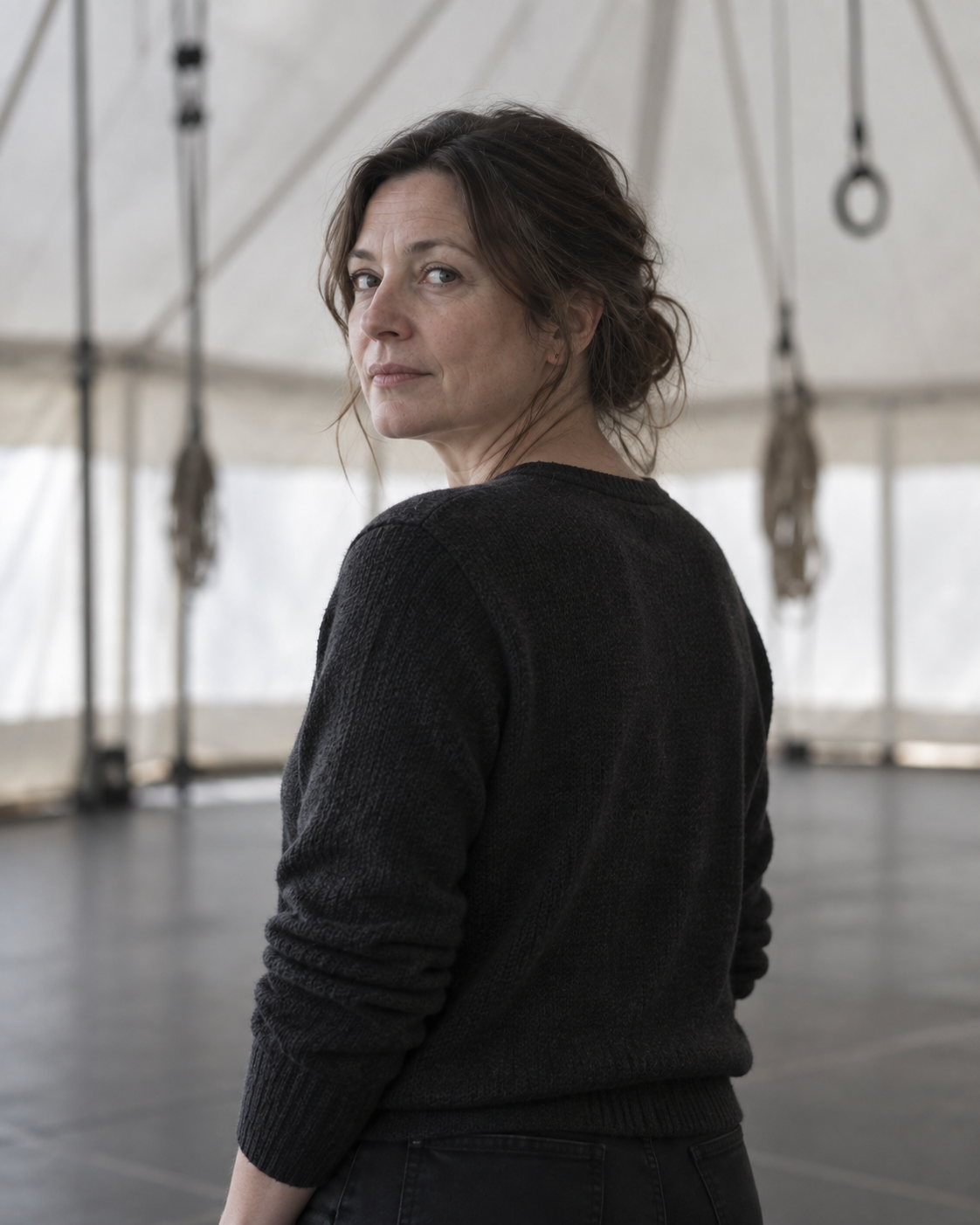
“Two teams, one plan, one document, and a number everybody agreed on. It should not feel remarkable, and it did.”
Nicole's care at the Philadelphia National Center involved an aesthetic surgeon and a Clinical Plate Design Specialist working from the same plan rather than in sequence. She had experienced the alternative previously and describes the difference as the entire point.
Her requirement was unusual and she says she led with it, having learned not to save it for later. She performs suspension work in a travelling sideshow, and needed a system with a documented load tolerance rather than a reassuring one. The planning conversation began with the clinical question of whether that was appropriate at all, and moved to the surface question only once the first was settled.
Both clinicians attended the planning conversation, which meant Nicole did not have to relay one team's reasoning to the other or discover a conflict between them after the fact. She was told, at two separate points, that a particular design idea she had brought was not compatible with the load figure she had asked for. Alternatives were offered each time. She describes those conversations as the ones that made her trust the rest.
Her result was completed over two stages across eight months. She keeps the documented plan in MyAREOLA and says she has read it more often than she expected to — usually before a booking, occasionally just to remind herself what was decided and why.
Individual results and experiences vary. Accounts are published with the participant’s permission, reviewed with them before publication and withdrawn at their request. Names appear as a first name and last initial.