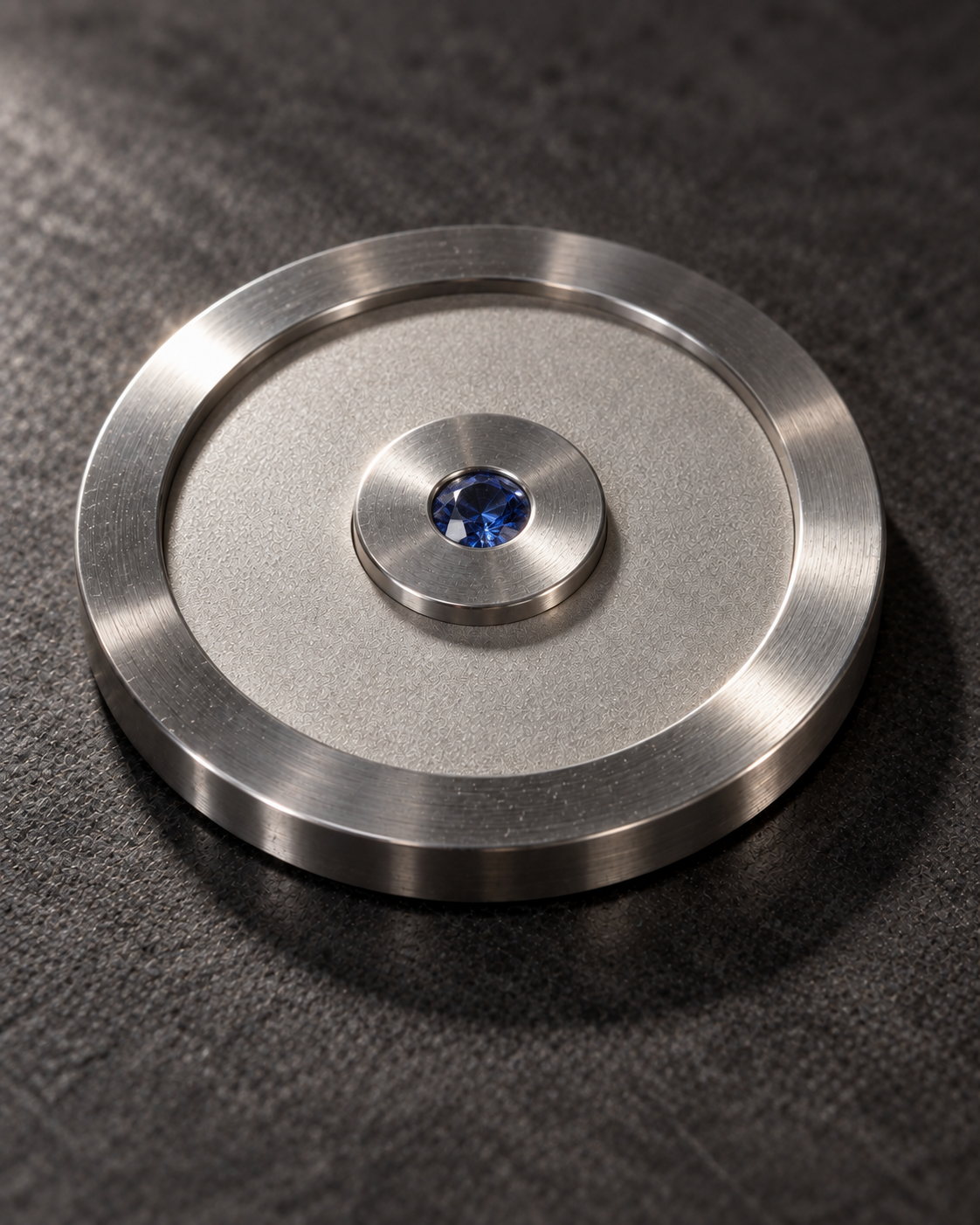
A setting on a plate is not a setting on a ring
A plate system is worn against skin and clothing, sleeps with the patient and is exchanged or cleaned regularly. Settings are therefore engineered flush or protected rather than raised: bezel, flush and channel work dominate, and prong settings are used rarely and only where profile allows.
What is evaluated before a stone is approved
Stone hardness, size, the depth the setting requires, how it sits against the profile, how the surrounding finish will wear around it, and whether the piece can still be inspected and cleaned normally. A concept that cannot satisfy all six is redesigned rather than attempted.
Materials the Studio works with
Diamonds, sapphires, rubies and other stones of appropriate hardness, set in platinum, gold or silver. Softer and more brittle stones — emerald and opal among them — are generally declined for everyday systems and may be considered for occasional-wear plates in an interchangeable collection.
Provenance
Stones are procured through suppliers who provide documented provenance under the Institute's Vendor Code of Conduct, and the documentation is held with the design record. AREOLA does not accept client-supplied stones: it cannot verify their treatment history or structural integrity, and it will not set a stone it cannot stand behind.
Living with a set piece
Settings are inspected at every Annual Plate Check and after any impact. Care guidance, cleaning limits and what to do if a stone moves are covered under Gem-Set System Care, and are reviewed with every client before a commissioned piece is delivered.
Content is reviewed with the relevant clinical, nursing, materials or administrative department before publication.